Commercial Plumber Services for Kailua-Kona Maintenance Programs
Commercial properties in Kailua-Kona rely on plumbing more heavily than many owners realize. A building can look fine from the parking lot while hidden strain builds inside drains, water lines, fixtures, and hot water systems. By the time the problem reaches a tenant, customer, or staff member, the disruption is already expensive. In a commercial setting, plumbing is not just a repair issue. It is an operations issue.
That is why maintenance programs matter. A skilled commercial plumber does far more than respond when a line backs up or a water heater stops delivering hot water. The real value shows up in prevention, documentation, coordination, and timing. In West Hawaiʻi, where contractors serve Kailua-Kona and surrounding communities such as Waikoloa, Kohala, Keauhou, Holualoa, and South Kona, commercial service often includes emergency calls, maintenance, repair, installation work, drain cleaning, sewer and drain replacement, and water heater service. For property managers and business owners, the goal is to turn those individual services into a planned system.
A good maintenance program is practical. It reduces surprise shutdowns, helps budget for repairs before they become emergencies, and supports compliance when work requires permits. It also gives decision-makers a clearer picture of where their plumbing dollars are going. That clarity is often the difference between a manageable operating expense and a costly interruption.
What a commercial plumbing maintenance program actually does
A maintenance program is not just a scheduled visit with a flashlight and a clipboard. In a well-run building, it becomes a recurring process for checking system condition, catching early failure points, and planning repairs at the right time. That matters in commercial environments because the plumbing load is rarely consistent. Some buildings see heavy restroom use during business hours. Others depend on reliable hot water all day. Still others need drains to stay clear because even a partial slowdown can affect sanitation, cleaning routines, or customer experience.
A commercial plumber typically approaches maintenance with a different mindset than a one-time service call. On a service call, the priority is to solve the immediate symptom. In a maintenance setting, the job is broader. The plumber is looking for patterns. Is one restroom backing up more often than the others? Is a certain branch of piping developing repeat leaks? Is a water heater showing signs of decline before it fails outright? Does a drain line need routine drain cleaning to avoid recurring overflows?
These are not abstract questions. They shape staffing, purchasing, and scheduling. If a property manager knows that one drain line needs periodic attention, they can plan for it. If the condition of a hot water system suggests upcoming water heater repair, they can compare the cost of repair against replacement before the building loses hot water unexpectedly. If sewer line repair is likely, they can prepare for permit requirements and tenant communication instead of scrambling after a failure.
Why Kailua-Kona properties benefit from planned service
Commercial plumbing problems are rarely isolated to one fixture. A clogged drain can signal a larger issue in the line. A weak hot water complaint may point to equipment, controls, supply conditions, or broader system wear. A leak around a fixture may be minor, or it may reflect aging components throughout the building. Waiting for failure removes your options. A maintenance program gives some of them back.
In Kailua-Kona, local contractors actively provide commercial plumbing services, including emergency plumbing, repairs, installations, drain cleaning, sewer and drain replacement, and water heater work. That range of service matters because most commercial properties eventually need all of it. Very few buildings can operate indefinitely on spot repairs alone.
I have seen the same management pattern play out again and again in commercial settings. A property team starts with reactive service because it feels efficient. They call a plumber near me when something breaks, get it fixed, and move on. For a while, that approach looks cheaper. Then the repeat calls begin. A restroom stoppage returns. The same tenant suite reports low hot water again. An after-hours leak sends someone to the site on a weekend. The invoices start to stack up, but the larger system still has no roadmap. Maintenance programs are what break that cycle.
That does not mean every property needs the same schedule or scope. A small commercial building may only need periodic review and targeted service. A larger or more heavily used property may need regular inspections, recurring drain cleaning, hot water system tracking, and preplanned repair windows. The point is not to overservice a building. The point is to match attention to risk.
The difference between a commercial plumber and a one-off repair mindset
Commercial plumbing work asks for judgment that goes beyond fixing the visible problem. A commercial plumber has to think about occupancy, disruption, access, timing, and sequencing. Repairing one section today should not create a larger shutdown tomorrow. The work may need to happen around business hours, tenant activity, or limited service windows. Even when the repair itself is straightforward, the planning often is not.
That is especially true when systems connect to regulated work. Hawaii County rules require permits for many plumbing jobs involving installation, alteration, repair, or replacement of plumbing, gas, drainage piping, fixtures, and water-heating or water-treating equipment, with only narrow exemptions for minor repairs. The Hawaii State Plumbing Code also covers design, installation, alteration, repair, and reconstruction of plumbing and drainage systems. In practice, that means maintenance planning should account for more than labor and materials. It should also account for whether the work triggers permitting.
This is one of the clearest advantages of using an established plumber Kona businesses can call on regularly. When a contractor knows the building and understands the difference between minor service and regulated work, the property team can make better decisions earlier. That saves time, and just as importantly, it reduces missteps. Delaying a needed repair is one problem. Starting work without recognizing permit requirements can create another.
Water heaters deserve more attention than they usually get
Hot water equipment often gets ignored until someone complains. In commercial buildings, that is a mistake. Water heaters are central to tenant comfort, sanitation, and operations. When they begin to fail, the warning signs may be subtle at first. Temperature inconsistency, slower recovery, or performance complaints from only part of the building can all point to follow this link trouble.
A maintenance program gives those signs context. Instead of treating each complaint as unrelated, the plumber can compare them over time. That is where water heater repair becomes more strategic. Some issues can be corrected before a full loss of service. Others may show that the unit is nearing the point where replacement planning is smarter than repeated repair.
In Hawaii County, permit materials and fee schedules specifically recognize categories related to electric water heaters, gas water heaters, solar water heaters, and associated piping. That matters because it confirms what many commercial owners discover during projects: water-heating work is not just routine mechanical labor. Depending on the scope, it can fall within defined permit categories.
Solar systems deserve separate mention. Solar water heater repair and installation are within regulated plumbing work, and Hawaii plumbing licensing rules include solar hot water heating systems within the scope of plumbing work. For commercial properties with solar equipment, maintenance should not treat these systems as an afterthought. They need knowledgeable review, realistic scheduling, and an understanding that regulated work may require permit coordination. If a site depends on solar-assisted hot water and performance drops, the cost is not limited to the equipment issue itself. Delays can ripple into tenant dissatisfaction and operational strain.
Drains and sewer lines are where reactive habits get expensive
Drain systems invite postponement because they often fail gradually. A sink drains a little slower plumber this month. A floor drain smells off next month. One restroom has a minor backup after a busy day. Because the problem seems intermittent, owners wait. That is usually where costs begin to rise.
Drain cleaning is one of the most useful maintenance tools in a commercial property, not because every line needs routine cleaning on a fixed schedule, but because repeated symptoms rarely improve on their own. A line that backs up more than once is telling you something. A drain that repeatedly needs attention should be evaluated in the context of the whole system.
The same goes for sewer line repair. In local marketing across Kona, contractors specifically identify sewer and drain replacement work as part of their service offering. That is significant for maintenance planning. It means property teams should not assume all underground or lateral issues are emergency-only events. Some can be identified early enough to plan repairs before a total failure. That can make all the difference for access, budgeting, and tenant notice.
Hawaii County permit materials also identify sewer lateral connection work and building sewer categories. That is another reason maintenance records matter. If a problem appears to be moving beyond ordinary service into repair or replacement territory, the building owner needs enough lead time to handle the work properly.
What a sensible maintenance scope usually includes
The best programs are specific to the property, but most effective commercial plumbing maintenance plans revolve around a few core functions:
- periodic inspection of fixtures, visible piping, drains, and hot water equipment
- tracking repeat issues so small service calls reveal larger patterns
- scheduling preventive drain cleaning where history supports it
- planning repair or replacement work before it becomes an after-hours emergency
- identifying when proposed work may require permits under county rules
That may sound simple, but the discipline of doing it consistently is where the value lies. Buildings rarely suffer from a lack of one-time repairs. They suffer from fragmented attention.
Emergency service still matters, even with strong maintenance
No maintenance program eliminates emergencies. Pipes leak unexpectedly. Fixtures fail. Drains back up at the worst possible time. A building still needs access to an emergency plumber. In West Hawaiʻi, that kind of service is commonly advertised, and for commercial operators it remains essential.
The mistake is assuming emergency response and maintenance are interchangeable. They are not. Emergency plumbing exists to stabilize the situation and restore function as quickly as possible. Maintenance exists to reduce how often that situation happens and to improve the odds that when it does, the repair path is already understood.
A property manager once told me the biggest benefit of a maintenance relationship was not that emergencies disappeared. It was that the emergency plumber arrived already knowing the site. That distinction is worth a lot. Familiarity with shutoffs, equipment locations, prior repairs, and recurring trouble spots can shorten diagnosis time and reduce confusion during a stressful event. In a commercial building, that speed has real value.
Permits are not a side issue in commercial planning
One of the most common mistakes in property maintenance is treating permits as something to worry about after the scope is decided. In commercial plumbing, that approach can backfire. Hawaii County rules are clear that many plumbing jobs involving installation, alteration, repair, or replacement require permits, with only narrow minor-repair exceptions. The state plumbing code also governs a wide range of plumbing and drainage work.
For commercial owners, this has a practical consequence. A maintenance program should not only identify what needs attention. It should also help separate simple service from work that may require permit review. That includes categories such as water heaters, solar water heaters, sewer lateral connections, and broader plumbing system changes.
This is not bureaucratic trivia. It affects schedule, tenant communication, and cost control. If a project is likely to move into permitted work, it is better to know early. Then the owner can align approvals, service windows, and contractor availability before the issue becomes urgent.
Choosing the right service partner for a maintenance program
The search phrase plumber near me makes sense in an emergency, but commercial maintenance calls for a more careful filter. Proximity helps, especially when response time matters. Experience with commercial systems matters more.
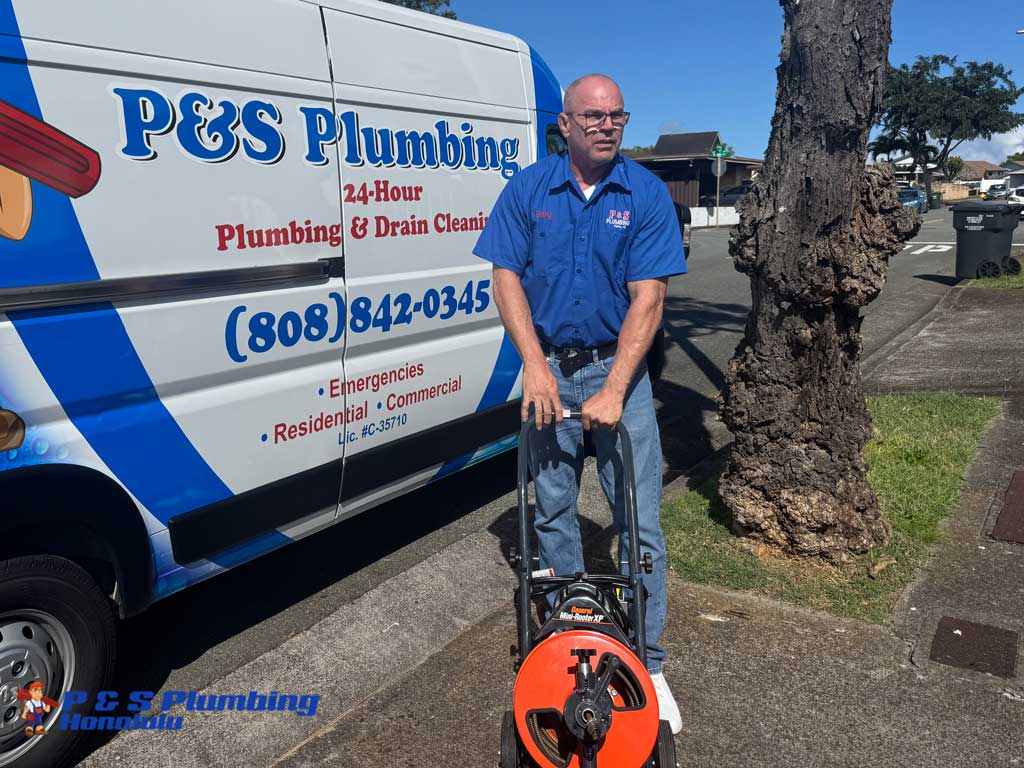
A dependable commercial plumber should be able to move between immediate repair work and longer-range planning. That includes routine service, drain cleaning, water heater repair, solar water heater repair where applicable, sewer line repair when needed, and commercial plumbing installation for upgrades or replacement work. Not every property needs all of those services right away, but a maintenance relationship works best when the contractor can support the building across its full lifecycle.
It also helps to work with a plumber Kona property managers can keep in regular rotation rather than treating every call as a new search. Continuity builds knowledge. Knowledge shortens troubleshooting. Shorter troubleshooting often means less disruption to occupants.
Commercial plumbing installation belongs in maintenance conversations too
Many owners think of commercial plumbing installation as a project category completely separate from maintenance. On paper, that seems logical. In practice, the two are often linked. Maintenance reveals which parts of a system are becoming expensive to keep alive. Once that pattern is clear, installation or replacement planning becomes the rational next step.
This is especially true when repairs repeat. If the same component or area continues to fail, there comes a point where replacing it through planned commercial plumbing installation makes more sense than funding a string of service calls. That decision should be based on service history, business impact, and permit considerations, not just the latest invoice.
A thoughtful maintenance program creates the record that supports that decision. Without records, owners tend to remember the last problem most vividly, not the full pattern. With records, they can compare frequency, disruption, and likely next steps with a much steadier hand.
Signs your property is overdue for a plumbing maintenance program
Some buildings practically announce the need for structured attention. Others hide it behind routine complaints that no one has stitched together yet. A few warning signs stand out:
- more than one repeat plumbing issue in the same quarter
- recurring drain cleaning calls for the same area or fixture group
- tenant or staff complaints about inconsistent hot water
- aging equipment being repaired without a longer replacement discussion
- uncertainty about whether planned plumbing work needs permits
None of these signs guarantee a major problem, but together they usually point to the same conclusion: the building would benefit from a more organized approach.
The business case is often stronger than the repair case
Owners sometimes hesitate to formalize maintenance because they see plumbing as a technical expense, not a business system. That misses the larger picture. Commercial plumbing affects operating hours, customer experience, sanitation, tenant satisfaction, and staff efficiency. A backed-up restroom can disrupt business far beyond the cost of the repair. A failed water heater can create complaints that linger after service is restored. A poorly timed sewer repair can interfere with occupancy and scheduling.
Maintenance programs work because they shift plumbing decisions from panic to planning. That does not make problems disappear. It does make them easier to manage. It creates time to compare options. It supports more accurate budgeting. It gives the owner a better chance to perform regulated work properly, with the right permits when required. And it helps a commercial plumber do better work because the conversation begins before the building is in crisis.
For Kailua-Kona properties, that is the real value. A maintenance program is not just a way to call a plumber less often. It is a way to use plumbing service more intelligently. Whether the need is emergency plumbing, water heater repair, solar water heater repair, drain cleaning, sewer line repair, or commercial plumbing installation, the most effective buildings are the ones that stop treating every issue as a surprise.
Name: P&S Plumbing Kona
Address: 73-5573 Kauhola St Bay #11, Kailua-Kona, HI 96740, United States
Phone: 808-325-3892
Website: https://www.psplumbinghawaii.com/
Email: [email protected]
Hours:
Sunday: Open 24 hours
Monday: Open 24 hours
Tuesday: Open 24 hours
Wednesday: Open 24 hours
Thursday: Open 24 hours
Friday: Open 24 hours
Saturday: Open 24 hours
Time zone: Hawaii-Aleutian Time
Open-location code / Plus code: MXQJ+P4 Kailua-Kona, Hawaii, USA
Map/listing URL: https://www.google.com/maps/search/?api=1&query=Google&query_place_id=ChIJwc_thcwNVHkRhwCIvILuP8w
Embed iframe:
Socials:
https://www.facebook.com/psplumbingkona/
https://x.com/PSPlumbingKona
https://soundcloud.com/p-s-plumbing-kona
https://www.youtube.com/@PSPlumbingKonaHawaii
P&S Plumbing Kona provides plumbing services from its Big Island headquarters on Kauhola Street in Kailua-Kona.
The official website lists Kona phone service at 808-325-3892 and also lists Hilo and Honolulu service contacts.
P&S Plumbing provides residential plumbing, commercial plumbing, drain and sewer service, water heater work, plumbing repairs, leak detection, fixture repair, kitchen plumbing, bathroom plumbing, and emergency plumbing support.
The official site lists the Big Island headquarters at 73-5573 Kauhola Street, Bay 11, Kailua Kona, HI 96740.
The company’s official site lists Hawaii State License Number CT-35710 and describes P&S Plumbing as licensed and insured.
Customers can contact P&S Plumbing Kona for drain cleaning, sewer-line concerns, water heater service, clogged toilets, fixture repairs, plumbing leak detection, pipe-lining needs, bathroom remodeling plumbing, kitchen plumbing, commercial plumbing, and urgent plumbing requests.
For plumbing service in Kailua-Kona and West Hawaii, call 808-325-3892 or visit https://www.psplumbinghawaii.com/
The public map listing uses plus code MXQJ+P4 Kailua-Kona, Hawaii, USA and can help customers find P&S Plumbing Kona near Kauhola Street.
Popular Questions About P&S Plumbing Kona
What does P&S Plumbing Kona provide?
P&S Plumbing Kona provides plumbing services for residential and commercial customers, including drain cleaning, sewer and drain service, water heater service, plumbing repairs, fixture repair and installation, leak detection, kitchen plumbing, bathroom plumbing, and 24-hour emergency plumbing.
Where is P&S Plumbing Kona located?
The official contact page lists the Kona location at 73-5573 Kauhola Street, Bay 11, Kailua Kona, HI 96740. The listing address is 73-5573 Kauhola St Bay #11, Kailua-Kona, HI 96740, United States.
What phone number should Kona customers call?
The official website lists Kona phone number 808-325-3892.
What is the email address for P&S Plumbing Kona?
The email address is [email protected].
What are P&S Plumbing Kona’s hours?
The listing hours show P&S Plumbing Kona as open 24 hours a day, seven days a week, Hawaii-Aleutian Time. The official website also references 24-hour emergency plumbing service.
Is P&S Plumbing licensed?
The official website lists Hawaii State License Number CT-35710. Customers can confirm license status directly with the relevant Hawaii licensing authority before hiring.
Does P&S Plumbing Kona offer emergency plumbing?
Yes. The official website references 24-hour emergency plumbing service and emergency services availability.
Does P&S Plumbing handle water heaters?
Yes. The official website lists water heater installation and repair, including tankless, solar, conventional water heaters, and boiler setup and repair.
What areas does P&S Plumbing serve from Kona?
The official service-area page lists Big Island / Kona communities including Kona, Holualoa, Kukio, Waikoloa Village, Kalaoa, Captain Cook, Kahaluu-Keauhou, Keauhou, Kainaliu, Waimea, Puako, and Kealakekua.
How do I contact P&S Plumbing Kona?
Call 808-325-3892 or visit https://www.psplumbinghawaii.com/. Social profiles: Facebook, X, SoundCloud, and YouTube.
Landmarks Near Kailua-Kona, HI
Kauhola Street: The street listed for P&S Plumbing Kona’s Big Island headquarters and a practical reference point for the Kailua-Kona location.
Queen Kaʻahumanu Highway: A major West Hawaii route connecting Kailua-Kona, Kona International Airport, Waikoloa, and nearby coastal communities.
Ellison Onizuka Kona International Airport: A major transportation landmark north of Kailua-Kona and near local service routes.
Kailua-Kona town: A central West Hawaii community served by local plumbing contractors.
Old Kona Airport State Recreation Area: A well-known Kailua-Kona landmark near residential and commercial areas.
Kailua Pier: A central waterfront landmark in Kailua-Kona and a common local reference point.
Aliʻi Drive: A major coastal route with homes, condos, restaurants, shops, and visitor properties.
Honokōhau Harbor: A marina and commercial harbor area near Kailua-Kona and local business routes.
Kaloko-Honokōhau National Historical Park: A major cultural and coastal landmark north of Kailua-Kona.
Keauhou: A South Kona community with homes, condos, resorts, and plumbing service needs.
Holualoa: An upland Kona community with residential properties and local businesses.
Waikoloa Village: A West Hawaii community listed on P&S Plumbing’s service-area page.
Waimea: A Big Island community listed on P&S Plumbing’s service-area page.
Kealakekua: A South Kona community listed on P&S Plumbing’s service-area page.
Captain Cook: A South Kona community listed within P&S Plumbing’s Big Island / Kona service-area references.
For residential plumbing, commercial plumbing, drain cleaning, sewer-line repair, water heater service, leak detection, fixture work, bathroom plumbing, kitchen plumbing, or 24-hour emergency plumbing near these Kailua-Kona and West Hawaii landmarks, contact P&S Plumbing Kona at 808-325-3892 or visit https://www.psplumbinghawaii.com/